RIpz 2G Disposable: Product Overview
Introduction
The RIpz 2G Disposable is a compact, pre-filled disposable device designed around a 2-gram oil capacity. Its all-in-one format combines the cartridge, heating element, and battery within a single device, creating a straightforward product format without the need for a separate battery or cartridge system.
The 2-gram capacity distinguishes this format from smaller disposable devices. However, the actual amount of usable material, device performance, ingredients, cannabinoid profile, and available flavors can vary depending on the specific RIpz product and production batch.
Because product specifications can differ between versions, packaging remains an important source of information. Details such as the listed cannabinoid content, ingredients, manufacturing information, batch identification, and applicable warnings should be checked on the original packaging before use.
Design and Format
The RIpz 2G Disposable follows the familiar design of an all-in-one disposable device. Instead of separating the battery from the cartridge, the components are contained within one portable unit.
This format keeps the overall design relatively simple. There is generally no separate cartridge to attach and no external battery system to maintain. Once the device reaches the end of its usable life, the entire disposable unit is typically handled according to applicable disposal requirements.
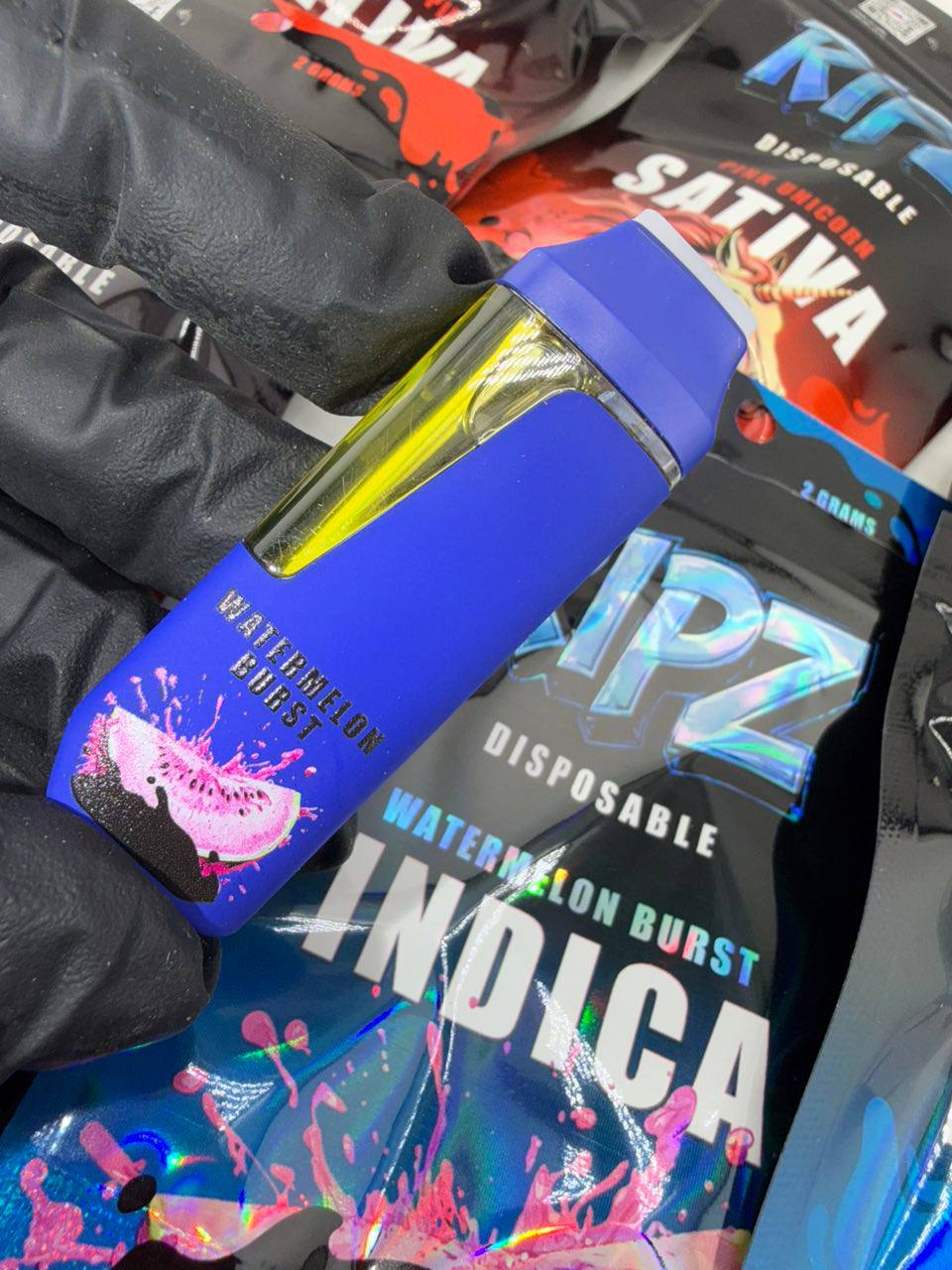
The physical appearance can vary by edition. Packaging and exterior graphics may also change between releases, so the appearance of one version should not automatically be treated as representative of every product carrying the RIpz name.
2-Gram Capacity
The “2G” designation refers to a stated two-gram capacity. Capacity, however, should not be confused with cannabinoid concentration or total active content.
For example, two products can contain the same nominal amount of material while having different cannabinoid concentrations or formulations. The most reliable information therefore comes from the product label and laboratory documentation when such documentation is available.
Actual usable output can also depend on the device design, heating system, formulation, and other manufacturing factors. Consequently, the stated capacity alone does not provide enough information to determine how long an individual device will last.
Device Construction
An all-in-one disposable generally incorporates several components into one housing. These can include an internal battery, reservoir, heating element, airflow pathway, and mouthpiece.
The reservoir holds the formulation, while the heating element converts the material into an aerosol when the device is activated. The battery supplies the electrical power required for that process.
The construction is intended to keep these components together rather than requiring users to assemble a separate setup. Nevertheless, construction details can differ among versions, and the manufacturer’s labeling should be treated as the primary source for model-specific specifications.
Formulation Information
The contents of a disposable should be identified from its packaging rather than assumed from the product name alone. Cannabinoid concentration, terpene content, ingredients, and formulation can vary by product and batch.
Names used for flavors or varieties may describe the intended profile, but they do not necessarily provide a complete description of the chemical composition. Similarly, a strain-inspired name should not be interpreted as proof of a particular botanical or cannabinoid profile without supporting documentation.
For this reason, the label provides the most useful starting point when reviewing a specific RIpz 2G Disposable.
Flavor and Variety
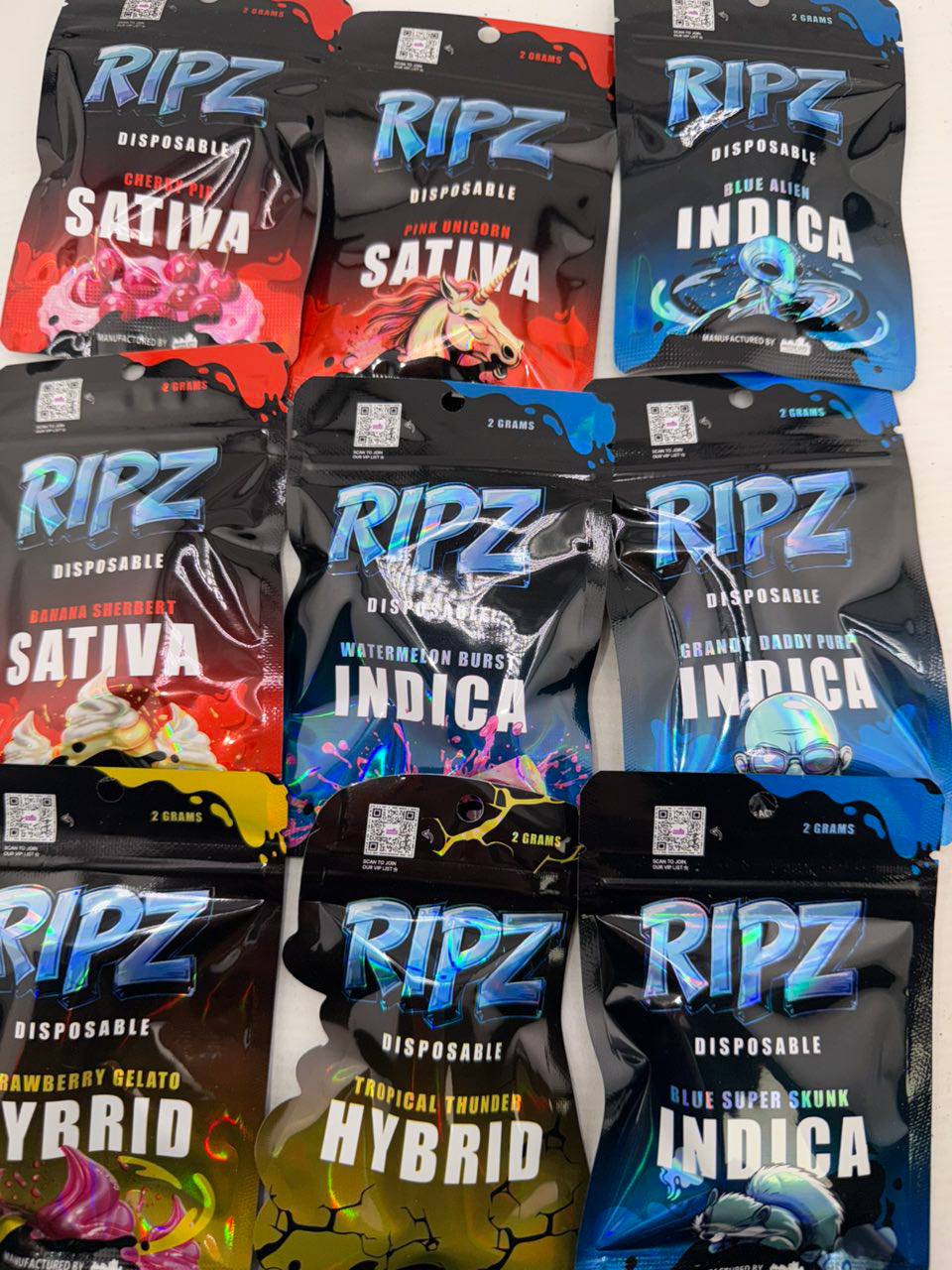
Different disposable products may be offered in multiple flavor or variety options. Each option can have its own labeling and formulation information.
Flavor names often provide a general indication of the intended sensory profile. However, descriptions should not be treated as laboratory-confirmed chemical information unless appropriate testing data is provided.
The experience associated with a particular formulation can also differ from person to person. Factors such as individual sensitivity, previous exposure, product composition, and consumption pattern can all influence how a product is perceived.
Packaging and Label Information
Packaging serves an important role in identifying a disposable and reviewing its specifications.
Depending on the market and applicable regulations, packaging may provide information such as:
- Product name
- Stated capacity
- Cannabinoid information
- Ingredient information
- Batch or lot identification
- Manufacturing details
- Applicable warnings
- Age restrictions
- Testing or compliance information
The presence and format of this information can vary by jurisdiction. Therefore, the packaging associated with the particular product should be reviewed rather than relying solely on a general online description.
Product Identification
Product identification becomes especially important when multiple editions, flavors, or packaging designs exist.
A product name alone may not establish that two differently packaged items contain exactly the same formulation. Batch numbers, labeling details, manufacturer information, and testing documentation can provide additional context.
Authenticity is another consideration. Products obtained from unauthorized sources may not have the same manufacturing controls or verification processes as products obtained through regulated channels.
Accordingly, product documentation should be considered alongside the physical packaging when evaluating a particular unit.
Portable Format
The disposable format is designed around portability. Its integrated construction eliminates the need to carry a separate battery and cartridge combination.
The compact format can make storage and transportation relatively straightforward. At the same time, disposable devices contain electronic components and should therefore be stored appropriately and kept away from conditions that could damage the battery or housing.
Heat, moisture, physical damage, and improper storage can affect electronic devices. The manufacturer’s storage guidance should take priority when it is available.
Battery System
An integrated battery supplies the power required by the heating element. The exact battery capacity and activation method depend on the particular model.
Some disposable devices use automatic activation, while other designs may incorporate different controls. Because these specifications are not necessarily identical across products, the individual package or manufacturer’s documentation should be consulted for the specific RIpz version.
Battery condition can also influence device operation. A device that appears damaged, unusually hot, swollen, leaking, or otherwise compromised should not be treated as a normal functioning unit.
Heating System
The heating element is responsible for converting the formulation into an inhalable aerosol.
Heating behavior can be influenced by several factors, including the formulation, airflow design, battery output, and hardware construction. Therefore, the stated capacity does not by itself describe the heating performance of a device.
A consistent experience also depends on the condition of the hardware. Damage, leakage, blocked airflow, or other defects can affect normal operation.
Storage Considerations
Proper storage can help protect the physical condition of a disposable device.
A suitable storage environment should follow the manufacturer’s recommendations. In general, electronic disposable products should be protected from excessive heat, moisture, crushing, and other forms of physical damage.
The device should also remain away from children and pets. Cannabis-containing products can pose significant risks when accidentally consumed, particularly by children.
Responsible Product Information
Information about cannabis-containing products should remain separate from assumptions about medical or therapeutic benefits. A product description cannot establish that a disposable is safe, effective for treating a condition, or appropriate for a particular person.
Cannabis and cannabinoid products can produce psychoactive effects and may interact with individual circumstances, medications, or other substances. Local laws also differ considerably regarding possession, use, purchase, and transportation.
Consequently, legal requirements and official product information should be considered before any product-related decision.
Quality and Testing
Laboratory testing can provide useful information about cannabinoid concentrations, contaminants, and other characteristics when testing documentation is legitimate and applicable to the specific batch.
Testing information should be matched to the product’s identifying details whenever possible. A generic certificate that does not correspond to the specific product or batch may not establish the composition of the individual device.
This distinction matters because formulations and manufacturing processes can change over time. Batch-specific information can therefore provide more meaningful evidence than a general product claim.
Authenticity Considerations
The appearance of packaging alone does not necessarily establish authenticity. Labels, batch information, manufacturing details, and verification systems can provide stronger indicators when available.
Consumers should be cautious of products with damaged packaging, missing labeling, inconsistent information, or unexplained differences from documented product specifications.
Additionally, products obtained outside regulated distribution channels may carry additional uncertainty concerning contents and manufacturing quality.
Disposal
A disposable device contains both electronic components and residual material. It should therefore not automatically be treated like ordinary household waste.
Local waste-management rules may provide specific instructions for electronic or battery-containing products. Those requirements can differ depending on location.
The manufacturer’s disposal guidance, when available, provides the most direct information for the particular device.
The RIpz 2G Disposable is an all-in-one disposable format identified by its stated 2-gram capacity. Its integrated construction brings together the reservoir, heating system, battery, and exterior housing in one device.
The 2-gram designation describes capacity rather than providing a complete picture of formulation, cannabinoid concentration, or expected duration. Those details depend on the individual product and should be verified through its packaging and applicable documentation.
Different versions may also vary in flavor, formulation, appearance, hardware, and labeling. As a result, model-specific information should take priority over broad descriptions of the product line.
For accurate product identification, the original packaging remains particularly useful. Information such as batch details, ingredients, cannabinoid content, manufacturer information, warnings, and applicable compliance details can help establish what a particular unit contains.
Overall, the RIpz 2G Disposable represents a compact, integrated device format. Its defining characteristics are the disposable construction and stated 2-gram capacity, while more specific characteristics depend on the particular version and batch.
RIpz 2G Disposable: Additional Product Details
Understanding the Product Format
The RIpz 2G Disposable belongs to a category of compact, pre-filled devices that combine several components into one unit. The reservoir, battery, heating element, and mouthpiece are incorporated into the same overall design.
This configuration differs from reusable hardware because there is no expectation that the main device will remain in service after the contents have been depleted. Instead, the disposable format is built around a limited-use product cycle.
The stated 2-gram capacity provides a useful point of identification. However, capacity alone does not describe every aspect of the product. Formulation, cannabinoid concentration, hardware specifications, and packaging details can vary between individual versions.
Physical Appearance
The exterior design contributes to the product’s overall identity. Depending on the particular release, the body may feature printed graphics, branding, flavor identification, or other visual elements.
Appearance can change between editions, however. For that reason, a photograph or description from one release should not automatically be used to identify another version.
Packaging can provide additional information when visual differences are difficult to distinguish. Product names, batch information, labeling, and other printed details can help separate one version from another.
Reservoir and Oil Capacity
The internal reservoir is designed to hold the stated formulation. With a 2-gram designation, the product is marketed around a relatively substantial capacity compared with smaller disposable formats.
Still, the amount of material contained in the reservoir should not be confused with the amount of a particular cannabinoid. A two-gram formulation could contain different concentrations depending on its composition.
The reservoir itself is also only one part of the overall system. Airflow, heating hardware, battery output, and formulation characteristics can influence how the device functions throughout its usable life.
Airflow Design
Airflow plays an important role in any inhalation device because air must move through the internal pathway as the heating element operates.
The exact airflow configuration depends on the individual hardware design. A restricted pathway, a wider pathway, or a different internal structure can produce different physical characteristics.
Because these specifications are not always published in general product listings, manufacturer documentation and packaging remain the better sources for model-specific details.
Mouthpiece Design
The mouthpiece forms the point of contact between the device and the user. Its shape and construction are part of the overall hardware design.
Different releases can use slightly different mouthpiece configurations. Materials, dimensions, and integration with the outer housing may therefore vary.
A clean and undamaged mouthpiece is an important part of normal product condition. Physical damage or contamination can indicate that the device should no longer be treated as a normal unit.
Battery and Hardware Integration
One of the defining characteristics of a disposable is the integration of the battery with the rest of the hardware.
Instead of relying on a separate rechargeable battery, the device contains its own power source. This reduces the number of individual components involved in the overall setup.
Battery specifications can differ between models, so assumptions about charging, activation, or battery life should not be made without checking the particular product information.
Some disposable designs are intended to operate without user-adjustable settings. Others may incorporate additional hardware features. The actual configuration depends on the specific model.
Product Consistency
Consistency can be influenced by both manufacturing and formulation. Even when two units carry the same product name, batch-level differences may sometimes exist.
Testing documentation can help provide a clearer picture of the contents of a particular batch. When available, information should correspond to the exact product and relevant batch identification.
This approach is more reliable than assuming that every item with similar packaging has identical characteristics.
Labeling and Transparency
Clear labeling can make product identification easier. Information regarding contents, capacity, ingredients, warnings, and manufacturing details can help consumers understand what they are looking at.
Regulated markets may impose additional requirements on cannabis-containing products. Those requirements differ from one jurisdiction to another.
Consequently, a description written for one market may not accurately reflect the labeling requirements of another. Local regulations and the original packaging should therefore take precedence.
Storage Environment
The condition of a disposable can be affected by its storage environment. Excessive heat, moisture, pressure, or physical impact may affect both electronic components and the contents of the reservoir.
A stable environment that follows the manufacturer’s recommendations is generally preferable. The device should also remain protected from children and pets.
Packaging should remain intact when possible because it can contain important identification and safety information.
Signs of Product Damage
Physical inspection can reveal whether a device has been compromised. Cracked housing, leaking material, severe dents, unusual swelling, or other visible damage can indicate an issue with the unit.
Electronic products that become unusually hot or show signs of battery damage warrant particular caution.
A damaged disposable should not be considered equivalent to an intact product. Manufacturer guidance or appropriate local disposal resources can provide direction when a device appears compromised.
Differences Between Capacity and Potency
The terms capacity and potency describe different characteristics.
Capacity refers to the amount of formulation contained within the device. Potency refers to the concentration of active compounds within that formulation.
A larger capacity does not automatically mean a stronger formulation. Likewise, a smaller device can contain a formulation with a higher concentration.
This distinction is particularly important when comparing products with different stated capacities. Product labels and laboratory results, when available, provide more useful information than capacity alone.
Product Naming
Product names can contain several elements, including the brand name, capacity, edition, flavor, or other identifiers.
The name itself should not be treated as a complete technical specification. Marketing terminology can describe a product category or intended identity without providing detailed information about its chemical composition.
For accurate identification, the complete label should be considered rather than relying on the title alone.
Batch Information
Batch or lot numbers can provide an important connection between a physical product and its manufacturing records.
When testing documentation is available, the batch number can help determine whether the documentation corresponds to the individual unit. This is particularly useful when several releases share similar packaging.
Batch information can also help distinguish newer and older versions of a product line.
Laboratory Documentation
Independent laboratory testing can offer additional information about product composition. Depending on the test, documentation may address cannabinoid concentrations and certain contaminants or other measured characteristics.
However, a laboratory report should be examined carefully. The product name, batch number, testing date, and other identifying information should correspond to the product being evaluated.
A general laboratory report without a clear connection to the specific unit provides less useful evidence.
Legal Considerations
Cannabis products are regulated differently around the world. Possession, sale, transportation, and consumption can be subject to specific restrictions depending on location.
A product description does not establish whether a particular item is legal in a user’s jurisdiction. Local laws should therefore be checked independently.
Age restrictions can also apply. Where cannabis products are regulated, applicable minimum-age requirements and purchasing restrictions should be followed.
Health and Safety Information
Cannabis-containing products can have psychoactive effects and may not be suitable for everyone. Individual responses can differ depending on factors such as tolerance, sensitivity, previous exposure, and other circumstances.
Potential impairment is another consideration. Activities that require alertness or coordination can become unsafe when someone is impaired.
Products should also be kept away from children and pets. Accidental exposure can create serious risks, particularly for children.
Responsible Storage and Handling
The physical condition of the device can be preserved more effectively when it is protected from unnecessary impact and unsuitable environmental conditions.
The product should remain in its original packaging when practical. This can help preserve identification information and reduce confusion between different versions.
If the device shows signs of leakage, severe damage, or battery failure, it should not be treated as an ordinary intact unit.
What the 2G Label Tells You
The 2G marking primarily identifies the stated amount of formulation associated with the product.
It does not independently establish cannabinoid potency, expected duration, flavor intensity, hardware quality, or individual effects.
This distinction helps prevent capacity from being interpreted as a complete product specification. A proper evaluation should consider the complete labeling and any available documentation.
Product Lifecycle
A disposable product generally follows a straightforward lifecycle. It is packaged, distributed, opened, used, and eventually discarded once it is no longer usable.
The battery and reservoir are integrated into the same general product structure. Consequently, the device is not designed around the replacement of individual components in the same way as many reusable systems.
Once the unit reaches the end of its usable life, appropriate disposal becomes part of the product lifecycle.
Packaging as a Reference Point
Original packaging can be particularly useful when researching a specific version.
It may contain information that is not visible on the device itself, including ingredients, cannabinoid amounts, manufacturing details, warnings, and batch identification.
For this reason, keeping the packaging available can make product verification easier. Online descriptions may provide general information, but the physical label is more directly connected to the individual unit.
Final Product Perspective
The RIpz 2G Disposable is characterized by its integrated construction and stated 2-gram capacity. Its compact format brings the reservoir, battery, heating system, airflow pathway, and mouthpiece together within one device.
At the same time, the name and capacity do not provide enough information to establish every technical characteristic. Formulation, cannabinoid concentration, hardware configuration, packaging, and testing information can vary between versions.
A careful product overview therefore focuses on verifiable specifications rather than assumptions. The original packaging, batch information, manufacturer documentation, and applicable laboratory records can provide the strongest basis for understanding a particular unit.
Ultimately, the RIpz 2G Disposable should be viewed as a specific product format rather than a guarantee of identical characteristics across every edition. Differences in formulation, hardware, and market requirements can affect the details associated with individual releases.
Accurate information remains especially important for products containing cannabis or other regulated substances. Local requirements, product labeling, age restrictions, storage guidance, and appropriate disposal practices should all be considered alongside the basic product specifications.
Reviews
There are no reviews yet.