

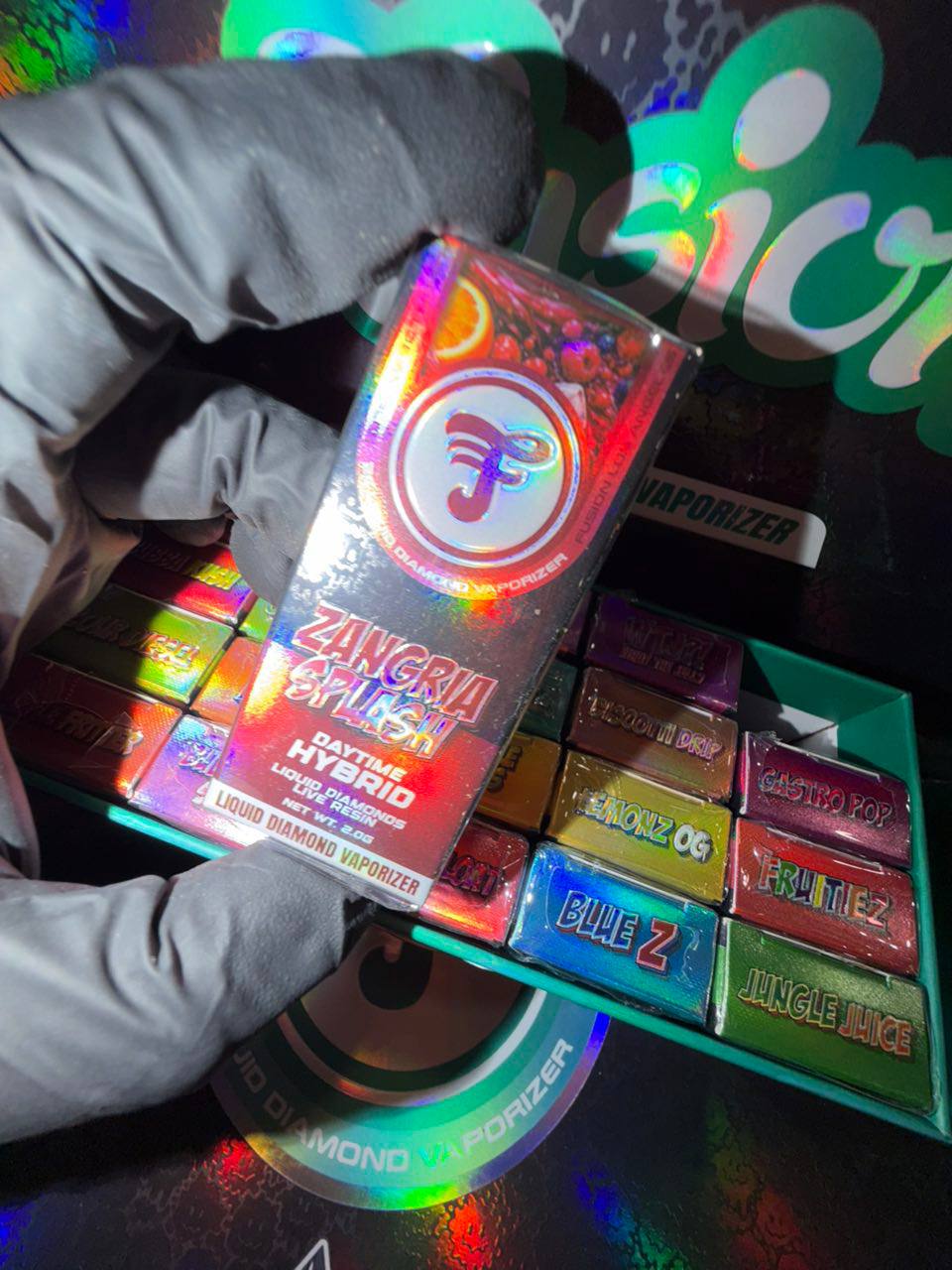
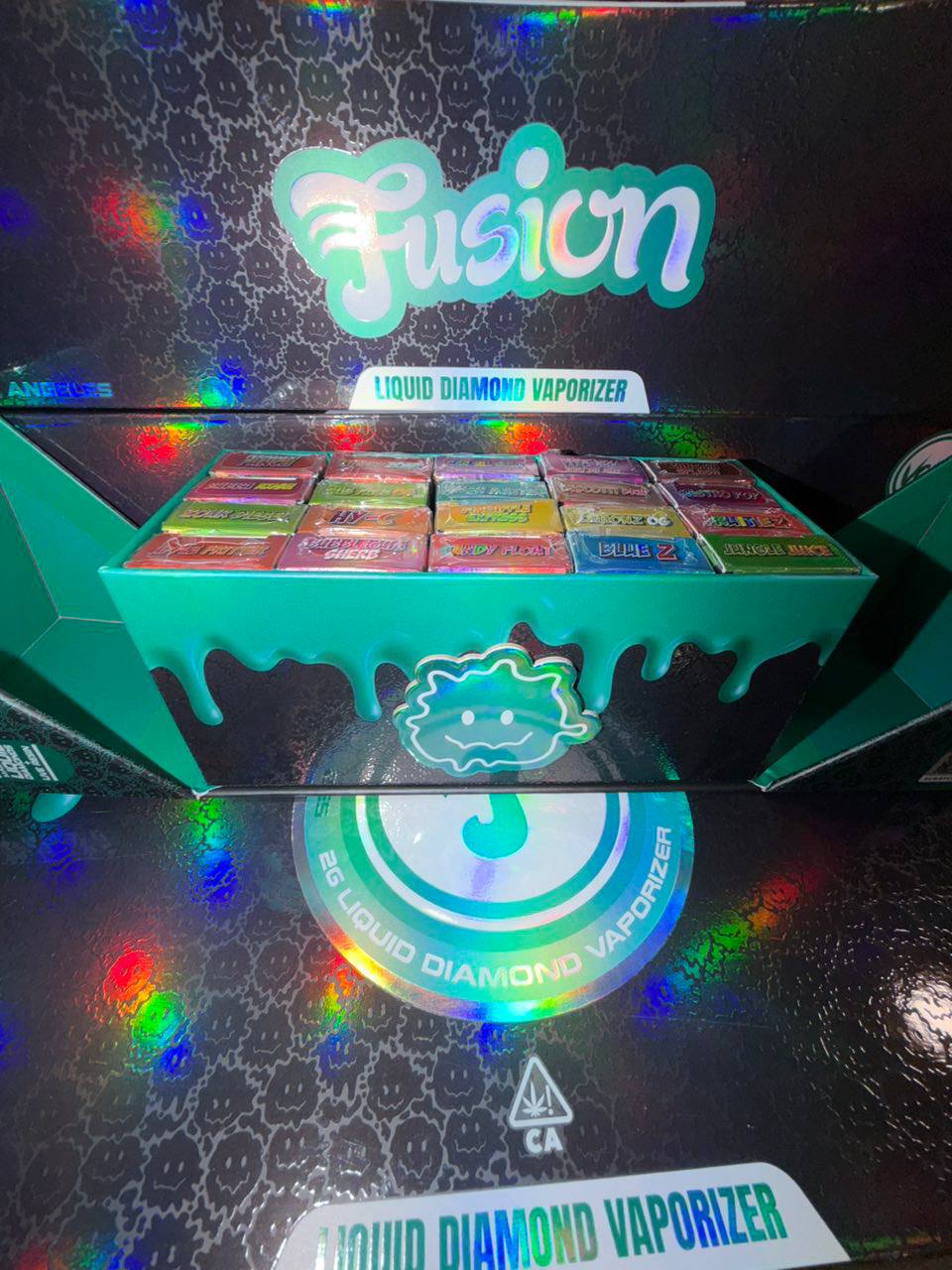
Fusion 2g Disposable: Product Overview
Introduction
The Fusion 2g Disposable is a compact, pre-filled vaporizer designed around portability and straightforward use. Its disposable format combines the cartridge, heating system, and battery into one self-contained device. As a result, there is no separate battery or refill container associated with the basic design.
The 2g designation generally refers to the amount of oil or concentrate contained in the device. However, exact contents can vary depending on the specific product version, formulation, manufacturer, and market. Packaging information therefore remains the most reliable source for details such as cannabinoid concentration, ingredients, batch information, and laboratory testing.
The device follows a familiar disposable-vaporizer format. Its body is typically designed to fit comfortably in the hand, while the internal heating element converts the stored formulation into an inhalable aerosol. Depending on the specific version, airflow and activation characteristics may differ.
Because product specifications can change between batches or editions, the physical appearance alone should not be treated as proof of authenticity or contents. Labeling, regulatory information, and applicable testing documentation provide more dependable information.
Compact Disposable Design
One of the defining characteristics of this type of vaporizer is its integrated construction. The oil chamber and battery are housed within the same device, which keeps the overall format relatively compact.
Unlike a traditional reusable vaporizer, the disposable design does not require a separate cartridge installation. The device arrives as a single unit, with the major components enclosed inside its housing. Consequently, the user does not need to assemble multiple hardware pieces before the device can function.
The compact structure also affects storage and handling. A smaller device can occupy less space than a larger reusable setup, although dimensions vary according to the particular model.
The exterior commonly includes branding and product information. Depending on the edition, additional details may appear on labels, packaging, or printed areas of the housing. These details can include the stated capacity, formulation information, manufacturing details, and other compliance information.
Understanding the 2g Capacity
The 2g capacity describes the approximate quantity of formulation contained within the product. It does not automatically indicate potency, quality, or expected duration.
Two products with the same stated capacity can have substantially different cannabinoid concentrations and compositions. Similarly, the amount of material contained inside a device does not determine how much aerosol an individual will produce or inhale.
For that reason, capacity should be considered separately from potency. The label may provide information about total cannabinoids, specific cannabinoids, or other constituents. Laboratory documentation, when available, can provide additional information about the tested formulation.
The contents may also vary between product editions. Changes in formulation, hardware, or manufacturing can affect the final specifications. Therefore, the packaging associated with a particular unit should be checked rather than relying solely on descriptions of earlier versions.
Hardware Construction
A disposable vaporizer generally contains several primary components within its outer housing. These components include a reservoir, heating element, battery, airflow pathway, and activation mechanism.
The reservoir holds the formulation until it reaches the heating system. The heating element then produces the heat necessary for vaporization. Meanwhile, the battery supplies the electrical energy required by the heating system.
Many disposable devices use an inhalation-activated mechanism. With this type of design, airflow through the device triggers the internal electronics. Other versions may use different activation systems.
The internal components remain enclosed during normal use. This helps maintain the compact appearance associated with disposable devices. However, it also means that individual components generally cannot be serviced in the same way as those found in reusable vaporizers.
Hardware performance can differ between versions. Airflow, heating behavior, battery capacity, and chamber construction are all factors that may influence the overall experience.
Formulation and Oil Characteristics
The formulation inside a disposable vaporizer can contain cannabinoids along with other compounds, depending on the product and applicable regulations. The exact ingredient profile should be verified through the product label or accompanying laboratory documentation.
Cannabinoid concentration can vary significantly between products. A stated capacity therefore provides only one piece of information about the formulation.
Some formulations may also contain compounds associated with flavor and aroma. Terpenes are naturally occurring aromatic compounds found in many plants, including cannabis. When included in a formulation, they can contribute to its characteristic aroma and flavor profile.
However, flavor descriptions should not be interpreted as guarantees of a particular chemical composition unless those details are supported by product documentation.
The appearance of the oil can also vary. Color, viscosity, and clarity may be influenced by the formulation, processing method, storage conditions, and other factors. Visual appearance alone does not establish purity or potency.
Flavor and Aroma Profile
Product descriptions often use flavor terminology to distinguish different formulations. These descriptions may refer to fruit, citrus, dessert, botanical, herbal, or other sensory characteristics.
Aroma and flavor perception are subjective. Individual experiences can differ because of differences in sensitivity, formulation, heating conditions, and other factors.
The flavor profile associated with a particular Fusion edition should therefore be confirmed from its original packaging rather than assumed from the general product name. Different versions can carry different formulations even when their hardware appears similar.
Storage can also influence sensory characteristics. Exposure to excessive heat, light, or unsuitable conditions may affect the formulation over time.
Battery and Power System
The integrated battery is another important component of a disposable vaporizer. Its purpose is to provide power to the heating element without requiring a separate external battery.
Battery performance depends on several factors, including battery capacity, heating characteristics, activation frequency, and the electrical design of the device.
Some disposable models are designed around a fixed battery that cannot be replaced. Other versions may include charging functionality. The presence or absence of a charging port should be verified on the specific unit.
A device should not be modified in an attempt to access or replace its internal battery. Lithium-based batteries can present safety risks when damaged, punctured, overheated, or improperly handled.
Airflow and Vapor Production
Airflow plays an important role in the operation of an inhalation-activated vaporizer. Air moving through the device can activate the heating system and influence the amount of aerosol produced.
The exact airflow characteristics depend on the hardware. A narrower airflow path can create a different draw sensation from a more open design.
Vapor production is also affected by the formulation and heating system. Consequently, the stated 2g capacity should not be interpreted as a direct measurement of vapor output.
Changes in airflow can sometimes indicate a hardware issue. Unusual resistance, leakage, damaged components, or inconsistent activation can affect normal operation.
Portability and Physical Format
The disposable form factor is primarily associated with portability. Its integrated construction eliminates the need to carry a separate cartridge and battery combination.
The device can generally be stored more easily than larger vaporizer systems because fewer external components are involved. Nevertheless, proper storage remains important.
Extreme temperatures can affect both the battery and the formulation. Excessive heat may alter the oil’s viscosity or place additional stress on the battery, while very cold conditions can affect fluid movement and device performance.
A stable storage environment is therefore preferable. The device should also remain protected from physical damage, moisture, and conditions that could compromise the housing.
Packaging Information
Packaging provides important information about the individual product. Depending on the market, labeling can include the product name, stated contents, cannabinoid information, manufacturing details, batch or lot identification, and regulatory information.
Some packages may also include a QR code or another method for accessing laboratory results. Where available, these documents can provide more detailed information than the front of the package.
The information should correspond with the individual unit. Mismatched labels, missing regulatory information, damaged packaging, or unusual printing can make verification more difficult.
Because counterfeit products can imitate the appearance of legitimate products, branding alone does not establish authenticity.
Laboratory Testing and Verification
Laboratory testing can provide useful information about the composition of a cannabinoid product. Depending on the testing program and jurisdiction, reports may address cannabinoid concentrations, contaminants, solvents, pesticides, heavy metals, or microbial concerns.
A laboratory report should be associated with the relevant product or batch whenever possible. Generic documents that cannot be connected to the specific product provide less useful verification.
Testing requirements differ between jurisdictions. Therefore, the presence, format, and scope of testing information may vary according to where a product is distributed.
Consumers should rely on official labeling and applicable regulatory documentation when evaluating product information rather than unsupported claims.
Quality Considerations
Quality encompasses more than potency. Hardware consistency, formulation accuracy, packaging integrity, manufacturing controls, and testing practices can all contribute to product quality.
A device with consistent hardware may provide more predictable operation. Similarly, accurate labeling can make it easier to understand the formulation and stated contents.
Quality claims should be supported by objective information whenever possible. Terms such as “premium,” “pure,” or “high quality” can have different meanings and do not independently establish a measurable standard.
For that reason, documented specifications are more useful than marketing language when comparing products.
Authenticity and Product Identification
Product identification is particularly important for branded disposable vaporizers. The package may contain identifying information such as lot numbers, production codes, security features, or manufacturer details.
These features can help distinguish an individual product from an unrelated or counterfeit item. However, verification methods differ between manufacturers and editions.
A product should not be assumed authentic solely because its packaging resembles photographs found online. Designs can change, and counterfeit products can reproduce visual elements with varying degrees of accuracy.
Official manufacturer information, where available, provides a more appropriate reference for verification.
Storage Considerations
Storage conditions can influence both hardware and formulation stability. Excessive heat can affect battery performance and may change the consistency of the oil. Direct sunlight can also expose the product to unnecessary heat and light.
Moisture presents another concern because electronic components can be affected by water exposure. Physical impacts can likewise damage the housing or internal components.
A cool, dry, stable environment is generally more suitable for storing electronic vaporizer products. The device should remain away from children and pets, as cannabinoid-containing products can present serious risks if accidentally consumed.
Responsible Handling
A disposable vaporizer contains both an electronic battery and a cannabinoid formulation. It therefore requires appropriate handling.
The housing should remain intact. A damaged, leaking, swollen, unusually hot, or malfunctioning device should not be treated as normal.
The device should never be opened or dismantled to inspect its internal components. Batteries can become hazardous when their protective structure is compromised.
Likewise, a leaking formulation should not be handled casually. Direct contact with the contents should be avoided, and local guidance should be followed for damaged products.
Legal and Age Restrictions
Cannabis and cannabinoid products are regulated differently across countries, states, provinces, and municipalities. In some locations, possession or use may be restricted or prohibited entirely.
Age requirements also vary according to local law. The legal status of a product cannot be determined from its branding or packaging alone.
Consumers should therefore verify the laws that apply in their jurisdiction. Where cannabis products are regulated, products obtained through authorized channels are generally subject to specific labeling and testing requirements.
Disposable Versus Reusable Hardware
The disposable format differs from reusable vaporizer systems in several ways.
A reusable device typically separates the battery from the cartridge or tank. This allows individual components to be replaced or recharged, depending on the design.
A disposable device integrates these components into one housing. Consequently, the hardware is generally intended to have a limited service life.
The disposable format can reduce the number of separate components involved, while the reusable format can provide greater flexibility. Neither design should automatically be considered superior because suitability depends on the hardware, formulation, regulatory environment, and individual circumstances.
Environmental Considerations
Disposable electronic products contain materials that should not simply be discarded with ordinary household waste in locations where specialized disposal is required.
The battery and electronic components can create environmental concerns when discarded improperly. Recycling and disposal programs vary by location, so local requirements should be checked.
Where dedicated electronic-waste or battery collection services exist, they may provide an appropriate disposal route. Packaging materials should likewise be handled according to local recycling guidance.
Product Experience
The overall experience associated with a disposable vaporizer results from several factors rather than capacity alone. Hardware design, airflow, heating characteristics, formulation, flavor, battery performance, and individual sensitivity can all influence perception.
For that reason, a simple specification such as “2g” cannot describe the complete product experience.
The same formulation may also be perceived differently by different individuals. Sensory responses are inherently subjective, while cannabinoid effects can vary according to individual factors and product composition.
Product descriptions are therefore most useful when they distinguish objective specifications from subjective characteristics.
What Makes the Format Distinct
The main distinction of this type of device lies in its integrated design. The reservoir, battery, and heating components occupy a single housing, creating a self-contained format.
The 2g capacity provides a stated measure of the formulation contained within the device, while the hardware determines how that formulation is heated.
Together, these features create a product format that is relatively simple from an external perspective. Internally, however, the device contains several electronic and mechanical components that work together to produce aerosol.
Understanding that distinction makes it easier to interpret product specifications accurately.
The Fusion 2g Disposable represents a compact, integrated vaporizer format built around a stated 2g formulation capacity. Its primary components are contained within one device, combining the reservoir, battery, heating element, airflow pathway, and activation system.
Exact specifications can vary by edition and production batch. Therefore, packaging remains the best reference for cannabinoid concentration, ingredients, testing information, manufacturer details, and regulatory requirements.
Capacity alone does not determine potency, quality, or expected performance. Hardware design, formulation, battery characteristics, airflow, storage conditions, and manufacturing standards all contribute to the characteristics of an individual unit.
For accurate product identification, the information printed on the specific package and any available laboratory documentation should take priority over generalized descriptions. Proper storage and responsible handling are also important because the product contains both electronic components and a cannabinoid formulation.
Overall, the defining features are its integrated disposable construction, stated 2g capacity, compact physical format, and combination of formulation and electronic heating technology. Specific flavor, potency, hardware, and testing characteristics should be evaluated from the documentation associated with the individual product rather than assumed from the product name alone.
Fusion 2g Disposable: Additional Product Details
Design and Everyday Convenience
The Fusion 2g Disposable follows the compact format commonly associated with all-in-one vaporizer hardware. Its self-contained structure keeps the major components together, creating a product that does not depend on a separate cartridge or external battery.
This integrated approach gives the device a simple exterior. The body houses the formulation chamber and electronic components, while the mouthpiece provides the connection between the internal airflow system and the user.
Because fewer individual parts are involved, the overall appearance can remain streamlined. In addition, the absence of a removable cartridge means there are fewer external components to keep track of during normal handling.
The exact dimensions, materials, and exterior finish can vary between versions. Consequently, photographs of one edition may not perfectly represent another production run. Packaging and manufacturer information remain the better reference for identifying a particular unit.
Oil Capacity and Internal Reservoir
The internal reservoir is designed to contain the stated formulation volume. With a 2g capacity, the device belongs to a larger-capacity category compared with many smaller disposable formats.
Capacity, however, should not be confused with concentration. The amount of formulation and the amount of cannabinoids within that formulation are separate measurements.
For example, two products may contain the same total quantity while having different cannabinoid concentrations. Likewise, differences in formulation can affect viscosity, aroma, color, and other characteristics.
The reservoir is enclosed within the device housing. This construction helps protect the formulation from direct external contact while also contributing to the device’s compact appearance.
A properly manufactured reservoir should maintain its contents under ordinary storage conditions. Leakage, cracking, or other visible damage can indicate a problem with the individual unit.
Heating Technology
The heating element represents one of the most important internal components. Its role is to convert the formulation into an aerosol that can pass through the airflow pathway.
Heating characteristics can vary according to the type of coil or heating material used. Different hardware configurations may produce differences in temperature, airflow, vapor density, and flavor perception.
The relationship between the heating element and the formulation is also important. Oil viscosity can influence how efficiently material reaches the heating area. Temperature and airflow can likewise affect the resulting aerosol.
Because these characteristics depend on internal engineering, they cannot always be determined from the outside of the device.
Manufacturers may also update hardware between editions. As a result, information associated with an earlier version should not automatically be applied to a newer one.
Battery Performance
The integrated battery supplies energy to the heating element. Battery capacity and power management can influence how consistently the device operates during its usable life.
Battery performance naturally changes as the stored electrical energy is depleted. In models that include rechargeable functionality, the charging system becomes another relevant component.
Not every disposable device is rechargeable. Some are designed around a fixed battery that reaches the end of its intended service life when the stored energy is depleted.
The presence of a charging port is therefore an important distinction between models. Product packaging should be consulted for the exact battery specifications and charging characteristics.
Battery safety remains important regardless of the design. Physical damage, overheating, or unauthorized modification can create risks associated with lithium-based batteries.
Airflow Characteristics
Airflow affects both activation and the overall draw sensation. When air passes through the device, an internal sensor may detect the change and activate the heating system.
The size and configuration of the airflow pathway can influence resistance. A tighter pathway may produce a different sensation from a more open pathway.
Airflow also interacts with heating behavior. Changes in the amount of air moving through the heating chamber can influence aerosol production and temperature.
A blocked or restricted pathway may therefore produce performance that differs from normal operation. Conversely, unusually loose airflow can indicate a hardware or sealing issue.
Since internal airflow designs vary, the characteristics of one model should not automatically be attributed to every device carrying the same brand name.
Flavor Characteristics
Flavor remains one of the more noticeable aspects of a vaporizer formulation. Depending on the specific version, the formulation may have botanical, fruity, sweet, earthy, citrus, or other sensory characteristics.
The actual profile depends on the ingredients and formulation used in that particular edition. Product names can provide a general indication, but they should not be treated as a complete ingredient list.
Sensory descriptions are also subjective. What one person experiences as sweet or fruity may be perceived differently by another person.
Temperature and hardware characteristics can influence flavor perception as well. Therefore, the same formulation may produce somewhat different sensory impressions across different devices.
Terpenes and Aromatic Compounds
Terpenes are aromatic compounds naturally present in many plants. Cannabis varieties can contain numerous terpenes, and some formulations may retain or include selected aromatic compounds.
These compounds can contribute to recognizable scent and flavor characteristics. However, a flavor name does not necessarily identify every terpene or ingredient present in a formulation.
A laboratory report or ingredient statement provides more reliable information when the precise composition matters.
The concentration of individual compounds can also vary between batches. Therefore, generalized strain or flavor descriptions should be viewed as broad product information rather than laboratory measurements.
Appearance of the Device
The physical appearance of a disposable can contribute to its identity. Branding, printed graphics, labeling, and overall shape may distinguish one edition from another.
Nevertheless, appearance is not a reliable substitute for verification. Packaging designs can change over time, and unauthorized products can imitate established visual elements.
The body may contain information relating to the product, batch, capacity, or manufacturer. Some versions may also use stickers, QR codes, authentication markings, or other identification features.
These details can be useful when checking whether the information on the physical unit corresponds with its packaging.
Packaging and Presentation
Packaging generally serves several purposes. It protects the product during transportation, provides identification information, and communicates legally required details where applicable.
The packaging may identify the stated capacity and cannabinoid content. Additional information can include ingredients, manufacturing information, warnings, batch numbers, and testing references.
Packaging requirements differ considerably between jurisdictions. Consequently, one market may display information that does not appear on products distributed elsewhere.
A complete description should therefore distinguish between confirmed specifications and information that can change according to market or production version.
Laboratory Results
Laboratory testing can provide objective information about a cannabinoid formulation. Depending on the testing program, a certificate of analysis may include cannabinoid concentrations and screening for various contaminants.
Testing can be particularly useful when a product description makes claims about potency or purity. Rather than relying on general marketing terminology, laboratory data provides measurable information associated with a specific sample or batch.
Not every jurisdiction uses the same testing requirements. Some markets impose extensive testing standards, while others have different regulatory frameworks.
The most useful laboratory report is one that can be connected to the specific product or batch through identifying information.
Cannabinoid Concentration
Cannabinoid concentration is separate from total product weight. A 2g device describes the amount of formulation, while cannabinoid percentages describe the composition of that formulation.
For example, the total weight does not by itself reveal the concentration of THC, CBD, or other cannabinoids. Those details must come from the product’s labeling or laboratory documentation.
Concentration can also vary between formulations carrying different flavor or edition names.
This distinction helps prevent confusion when comparing products. Capacity describes quantity, while laboratory results and labeling provide information about composition.
Product Consistency
Consistency is an important consideration in manufactured vaporizer products. A well-controlled manufacturing process can help maintain similar specifications across individual units.
Several variables can affect consistency, including filling accuracy, heating-element construction, battery performance, airflow design, and formulation characteristics.
Batch-level testing and quality-control procedures can provide additional information about manufacturing standards.
However, product consistency should not be assumed solely from a brand name. Objective documentation is more useful when evaluating manufacturing claims.
Storage Stability
Storage conditions can affect both the formulation and electronic components. Heat, light, moisture, and physical pressure can all influence a disposable device.
High temperatures may change the viscosity of the formulation. Extremely cold conditions can also alter how easily the formulation moves through the internal system.
The battery has separate storage considerations. Extended exposure to excessive heat can negatively affect battery stability, while physical damage can create additional hazards.
A stable environment away from direct sunlight and moisture is generally more appropriate for electronic products containing oils and lithium-based batteries.
Physical Durability
The exterior housing protects the internal components from ordinary handling. Nevertheless, a disposable vaporizer remains an electronic product and can be damaged by significant impact or pressure.
Cracks, dents, broken mouthpieces, or damaged seals may affect the device’s performance.
A damaged unit can also present concerns involving the battery or formulation. For that reason, visible physical damage should not be regarded as merely cosmetic when it affects the structural integrity of the device.
The specific materials used for the housing can vary between models and production versions.
End-of-Life Considerations
A disposable device eventually reaches the end of its intended service life. This can occur when the formulation has been depleted, the battery is no longer functional, or the device develops another hardware issue.
Unlike many reusable vaporizers, the integrated design generally does not allow individual components to be replaced by the consumer.
Electronic waste considerations are therefore relevant. The internal battery and electronic components should be handled according to applicable local disposal requirements.
Different communities provide different options for battery and electronic-waste collection. Local recycling guidance can clarify the appropriate method.
Responsible Product Information
Clear product information should distinguish verified specifications from promotional descriptions.
A useful description can identify capacity, hardware format, packaging information, formulation characteristics, and available testing documentation without making unsupported claims.
This approach also helps readers understand which characteristics may change between editions.
For instance, flavor, battery configuration, charging functionality, and cannabinoid concentration can depend on the specific product version. Those details are best confirmed through the individual package and applicable documentation.
Comparison With Smaller Disposable Formats
The 2g capacity places this device in a larger-capacity category than many 0.5g or 1g disposable products.
The difference is primarily one of formulation quantity. A larger capacity does not automatically mean stronger effects or better quality.
Hardware dimensions may also change as capacity increases. However, manufacturers can use different reservoir designs to maintain a relatively compact exterior.
When comparing capacities, it is useful to consider both total formulation weight and cannabinoid concentration. Looking at only one measurement can create an incomplete picture.
Comparison With Refillable Devices
Refillable vaporizers generally separate the battery from the reservoir. Depending on the design, users can replace cartridges or refill tanks rather than replacing the entire device.
The Fusion disposable format takes a different approach by integrating the major components into one unit.
This can simplify the physical design because fewer separate parts are involved. On the other hand, the integrated structure provides less flexibility for component replacement.
The choice between formats ultimately depends on hardware preferences, local regulations, product availability, and the specifications of the individual device.
Product Identification by Edition
Product editions can sometimes share similar names while differing in formulation or hardware. Small changes in packaging, labeling, or design may identify a particular version.
The exact edition matters because specifications can change over time.
A description that refers to a general product family may therefore not accurately represent every individual unit. Batch-specific information provides greater precision.
This is particularly relevant when discussing capacity, cannabinoid concentration, charging functionality, and flavor characteristics.
General Product Summary
The Fusion 2g Disposable is characterized by its integrated construction and stated 2g formulation capacity. The reservoir, heating system, battery, airflow pathway, and activation components are contained within a single compact device.
Its specifications can vary according to the particular edition and market. Therefore, the individual packaging remains the most dependable source for exact formulation, cannabinoid concentration, ingredients, testing information, and hardware details.
The device’s performance depends on the interaction between its formulation and internal hardware. Airflow, heating characteristics, battery behavior, oil viscosity, and storage conditions can all influence the final experience.
At the same time, capacity should not be treated as a measurement of potency or quality. Those characteristics require separate information from labeling and, where available, laboratory testing.
The disposable format also creates different considerations from reusable vaporizer systems. Since the major components are integrated, individual hardware replacement is generally limited. Battery safety, storage conditions, physical integrity, and appropriate disposal consequently remain relevant throughout the product’s life cycle.
Final Product Perspective
From a design perspective, the main feature of the Fusion 2g Disposable is its all-in-one construction. The format combines formulation storage and electronic heating technology within one compact housing.
The stated 2g capacity provides information about the quantity of formulation rather than its strength. Meanwhile, cannabinoid percentages, ingredient information, and laboratory results provide a more complete understanding of composition.
Flavor and aroma characteristics can add another dimension to the product description, although sensory experiences naturally differ between individuals. Hardware configuration can influence these characteristics as well.
For accurate identification, the specific package and batch information should take priority over generalized descriptions. This is particularly important because product editions and specifications can change over time.
Overall, the device represents a self-contained vaporizer format with a larger stated formulation capacity and integrated electronic components. Its most relevant characteristics include the reservoir size, heating system, battery configuration, airflow design, formulation, packaging information, and applicable testing documentation.
A complete understanding of the product therefore comes from considering all of these elements together rather than focusing on capacity or branding alone.


Reviews
There are no reviews yet.